YOUTH AND DEVELOPMENT
What is training compensation, and when does a club get paid?
Training compensation is money FIFA's rules make a new club pay to the clubs that trained a young player, when he signs his first professional contract or moves to a club in another country before he turns 23. Unlike solidarity, it is owed even when there is no transfer fee, so a player who leaves for free can still be worth a lot to his old club.
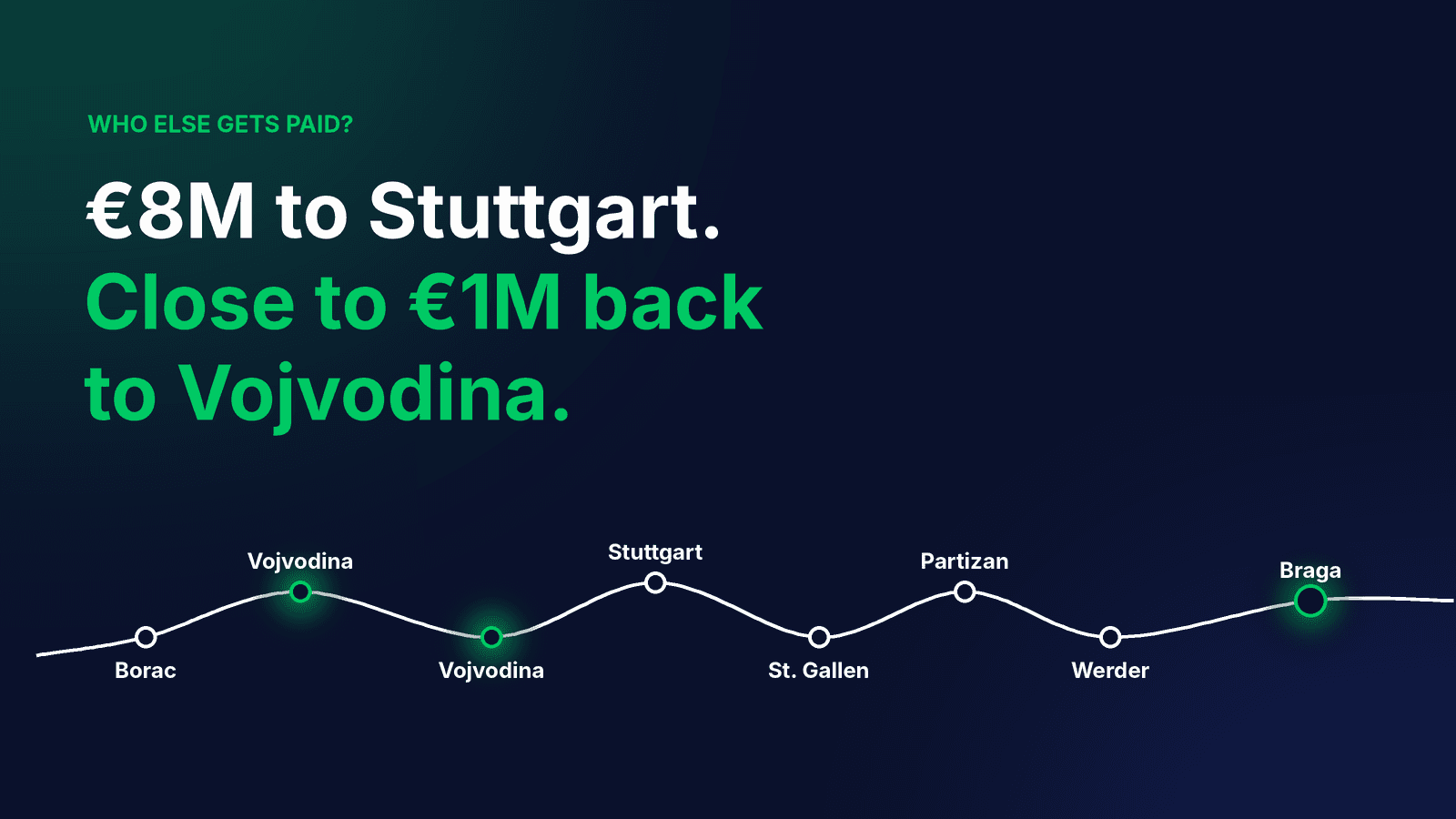
On Monday we looked at what Vojvodina still earns from Jovan Milošević's transfer to Braga. That was solidarity, which depends on a transfer fee. This is the other rule, explained through a simple, fictional example.
Marko's path
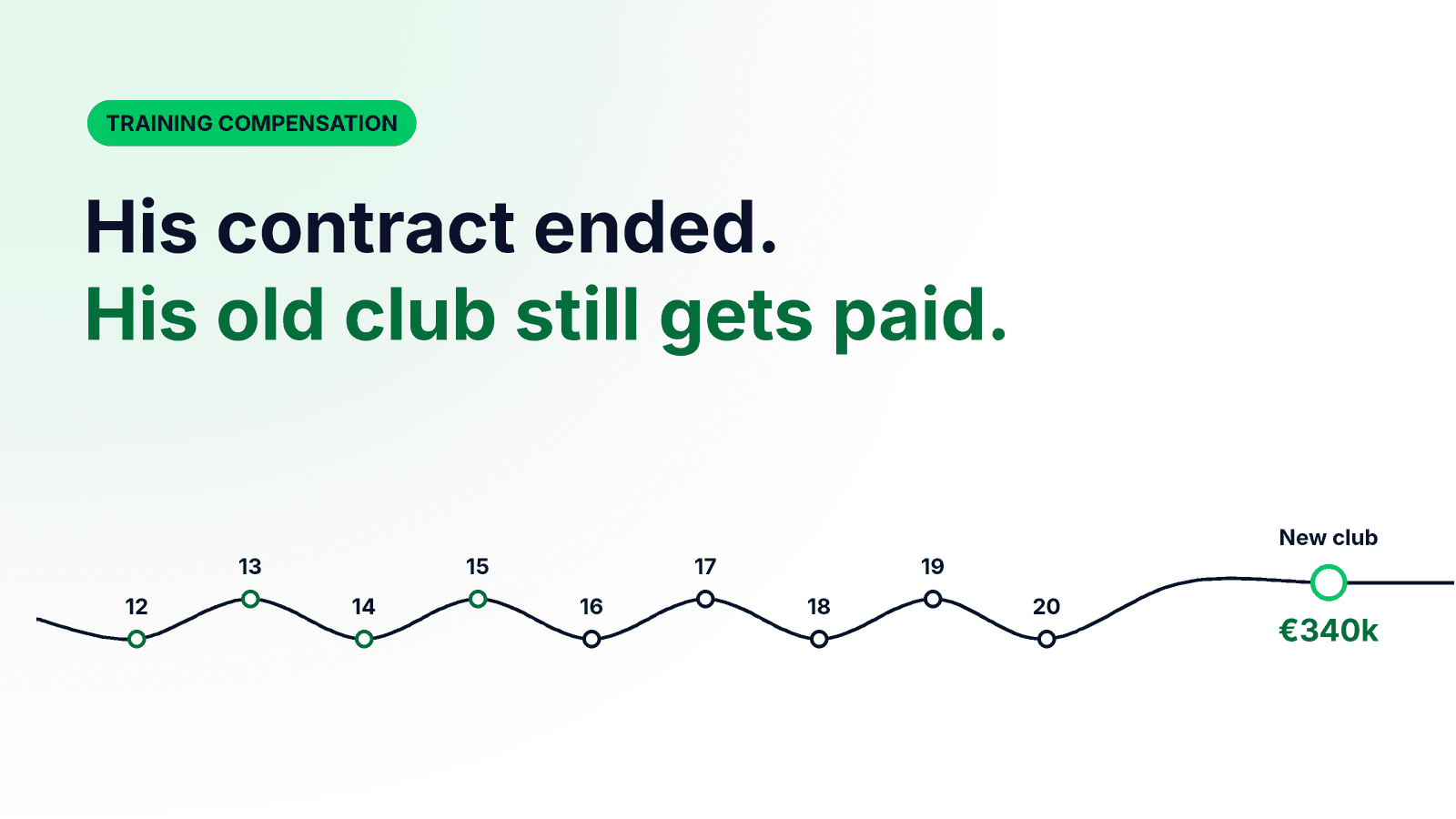
Marko joins a club's academy at 12. At 17 he signs his first professional contract there, and he stays until 20, when his contract ends. A club in another country then signs him as a free agent.
There is no transfer fee, so no solidarity payment is due. But Marko is not yet 23, so the new club owes training compensation to his old club.
How much is it?
Training compensation is counted per year of training, from the season of the player's 12th birthday to his 21st. The amount per year depends on the category FIFA gives each club. For clubs in UEFA countries, the indicative amounts are:
- Category 1: €90,000 a year
- Category 2: €60,000 a year
- Category 3: €30,000 a year
- Category 4: €10,000 a year
The years from 12 to 15 always count as category 4. From 16 on, the amount depends on the category of the new club, with special rules for moves within the EU and EEA. If Marko's new club is in category 2:

Four years at €10,000 and five years at €60,000 make €340,000. Since November 2022, FIFA pays training compensation through its Clearing House, based on the player's registration history.
When it usually isn't owed

- The new club is in category 4, the lowest.
- The old club ended the player's contract without a valid reason.
- Within the EU and EEA, the old club did not offer the player a new contract before his contract ended, unless it can show it still has a right to compensation.
- The player moves within the same country. Training compensation applies to moves between national associations.
When a player has already moved as a professional, later transfers before 23 only pay his most recent club, for the time it trained him.
Why age matters so much

Training compensation stops at the end of the season of the player's 23rd birthday. If Marko had moved at 24, nobody would owe anything. For his old club, those few years make the difference between €340,000 and nothing.
That is why it helps for a club to know which of its former players are still under 23, and to keep every registration correct, so the Clearing House can find it.
Training compensation and solidarity, side by side
- Training compensation: a fixed amount per year of training from 12 to 21. Only until the player is 23. Paid even without a transfer fee.
- Solidarity: 5% of the transfer fee, shared by every club that trained him from 12 to 23. Only when a fee is paid, at any age.
Both can apply to the same transfer, for example when a 21-year-old is sold abroad for a fee.
Sources
- FAI: FIFA solidarity and compensation payments
- Football Finance Files: training compensation explained
- FIFA circular on the categorisation of clubs
A simplified explanation of FIFA's Regulations on the Status and Transfer of Players, Annex 4. Not legal advice: for a real case, check the current regulations or ask a lawyer.